
State Management Basics for Every Frontend Developer
State management is one of the most important concepts in frontend development because it controls how data flows through an application and how the user interface reacts to changes. Developers who understand the fundamentals of state can build smoother, faster, and more predictable user experiences. Those looking to strengthen their skills can consider enrolling in a Full Stack Developer Course in Mumbai at FITA Academy, which provides comprehensive training in both frontend and backend development. This guide explains the essentials of state management in a clear and readable way.
Understanding What State Means
State refers to any data that can change while a user interacts with an application. It includes values such as form inputs, selected items, authentication status, and loaded content. When this data changes, the user interface needs to update so that the screen stays accurate and consistent. Without proper state handling, applications can become confusing or behave in unexpected ways.
Types of State in Frontend Applications
Frontend applications often deal with different categories of state.
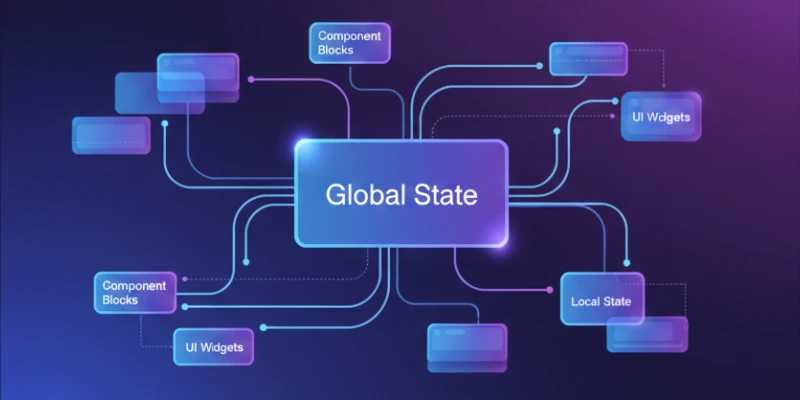
Local state belongs to a single component and affects only a small part of the interface. An example is a dropdown that opens and closes.
Global state is shared across multiple areas of the application. Examples include user login information or theme preferences.
Server state comes from external sources such as APIs. This type of state must stay synchronized with remote data and often requires loading and error tracking. Anyone looking to deepen their understanding of handling server state can explore a Full Stack Developer Course in Kolkata, which provides practical training on managing data flow and building robust applications.
UI state relates to how the interface looks or behaves, such as active tabs or popup visibility. Recognizing these types helps developers decide how and where to store the data.
Why State Management Matters
As applications grow, state becomes more complex. Without a clear strategy, data can become scattered or duplicated which leads to bugs and inconsistent screens. Good state management helps maintain predictable behavior. It reduces unnecessary re renders and keeps the logic easier to follow. It also allows different parts of the application to work together without conflict. An organized method contributes to improved performance and a more streamlined development process.
Core Principles of Managing State
State management works best when developers follow a few important principles.
Single source of truth means storing each piece of data in one place to avoid conflicts.
Immutability encourages developers to treat state changes as new versions of data instead of modifying old values. This helps track updates more clearly.
Clear data flow keeps the movement of state organized so that developers can see how changes occur from start to finish.
By applying these principles, developers gain better control over how their applications behave. Those looking to expand their practical skills can consider joining a Full Stack Developer Course in Delhi, which offers hands-on training to build well-structured and efficient applications.
Common State Management Approaches
Frontend developers can manage state in various ways depending on the size and needs of a project. Smaller applications often use built in state options provided by the framework. Larger applications may rely on dedicated libraries that offer more structure for handling shared and complex data. Some tools focus on predictable data flow while others offer simple patterns for maintaining state across components. The essential aspect is selecting a method that aligns with the intricacy of the application.
While focusing on technical skills like state management is essential for frontend development, many developers also benefit from broader learning opportunities. For instance, enrolling in a reputable B School in Chennai can help sharpen management, communication, and problem-solving skills, which are valuable when leading projects or collaborating with teams in software development. Combining technical expertise with strong business knowledge can give developers an edge in their careers.
State management is at the heart of every interactive application. By understanding what state is, how it behaves and how it should be structured, frontend developers can build interfaces that are stable and easy to maintain. A strong grasp of these fundamentals prepares developers to handle more advanced patterns and tools with confidence.
Also check: Dockerizing a Full Stack App for Easier Deployment