
Let’s Look at the Exciting Role of a Scrum Master in Agile
In the fast-paced digital world of today, businesses need to produce high-quality goods fast while adjusting to ongoing change. This is where the Agile process comes into play, and the Scrum Master is at the center of Agile. The Scrum Master, who is sometimes misinterpreted as a project manager, is actually a servant leader, coach, and facilitator who helps teams reach their full potential. Scrum Masters facilitate cooperation, openness, and ongoing development by making sure Agile principles are correctly used.
They have a direct impact on the output, morale, and productivity of the team. The need for qualified Scrum Masters is growing as more businesses implement Agile frameworks. In addition to aspiring Scrum Masters, developers, managers, and stakeholders working in Agile environments must comprehend this job. FITA Academy is the best choice for learning Scrum Master skills, offering expert-led Agile training with real-world project simulations and industry-aligned Scrum practices.
Understanding Agile and the Scrum Framework
Agile is a way of thinking that prioritizes delivering value through collaboration, adaptability, and customer feedback. Instead of rigorous long-term planning, agile promotes short development cycles called iterations. Scrum, one of the most well-liked Agile frameworks, provides a rigorous yet flexible approach to product development. It describes specific duties, events, and artifacts that guide groups toward continuous improvement.
Scrum promotes openness by doing frequent evaluations and modifications. The architecture centers on teams delivering potentially shippable chunks of a product during sprints, which usually span two to four weeks. Understanding Scrum is essential to appreciating the function of the Scrum Master, who makes sure the framework is used correctly and consistently. Teams may stray from Agile principles in the absence of a capable Scrum Master, which would diminish the efficacy of Scrum procedures.
Who Is a Scrum Master?
A Scrum Master is responsible for helping the Scrum team understand and apply Agile concepts and Scrum procedures as a servant leader and facilitator. Unlike traditional supervisors, Scrum Masters do not assign tasks or influence team members. Instead, they focus on enabling the group to interact and self-organize in an efficient manner.
They serve as a liaison between the organization, the product owner, and the development team. Scrum Masters enable teams to accept responsibility for their work by creating an atmosphere of trust and accountability. Their success is determined by the team’s overall performance rather than by individual authority. The Scrum Master position is rewarding and challenging because of this change in perspective. Scrum Master Certification in Chennai equips learners with Agile principles, Scrum frameworks, real-world project simulations, and industry-aligned practices for effective team leadership.
Key Responsibilities of a Scrum Master
A Scrum Master’s duties go beyond just facilitating meetings. They guarantee that Scrum events are productive, time-bound, and outcome-oriented. They help teams comprehend the roles, guidelines, and principles of Scrum. Additionally, Scrum Masters assist teams in implementing Agile best practices including incremental delivery, backlog refinement, and continuous integration. Finding and eliminating obstacles that impede team success is another crucial duty.
These obstacles may be interpersonal, organizational, or technical. Scrum Masters safeguard the team’s concentration and output by resolving these problems. They are both change agents and team supporters since they collaborate closely with leadership to advance Agile ideas throughout the company.
Facilitating Scrum Events Effectively
Agile development is given structure and rhythm by Scrum events, which are carried out efficiently by the Scrum Master. They assist the team in understanding sprint objectives and committing to workable tasks during sprint planning. Scrum Masters make ensuring that conversations during daily stand-ups stay succinct and concentrated on obstacles and progress. While retrospectives concentrate on ongoing improvement, sprint reviews give teams the chance to present finished work and get input from stakeholders.
These gatherings are facilitated by the Scrum Master in order to promote candid dialogue and helpful criticism. They assist teams in determining what is effective and what requires improvement by providing a secure environment for dialogue. Stronger results and improved teamwork are the results of well-run Scrum events. The Training Institute in Chennai offers a Scrum Master program focusing on Agile fundamentals, Scrum framework, team facilitation, sprint planning, stakeholder collaboration, and hands-on practical simulations.
Servant Leader and Coach
The chance to exercise servant leadership is one of the most thrilling parts of being a Scrum Master. Scrum Masters assist and mentor team members to realize their full potential rather than leading the group. They promote accountability, self-organization, and lifelong learning. Coaching is assisting people and groups in reflecting on their procedures and making gradual improvements.
Additionally, Scrum Masters coach Product Owners in value prioritization and backlog management. Scrum Masters cultivate a culture of empowerment and trust by leading via influence rather than authority. In addition to enhancing team performance, this leadership approach fosters a supportive and cooperative work environment.
Removing Impediments and Supporting Continuous Improvement
Eliminating obstacles that impede the team’s progress is one of the Scrum Master’s primary duties. These could include organizational bottlenecks, unclear requirements, dependence problems, or a lack of tools. Scrum Masters actively seek out these issues and work with stakeholders to find solutions. Additionally, they encourage teams to try out new procedures and evaluate the outcomes, which fosters continual development. Scrum Masters assist teams in changing and adapting through constant feedback and retrospectives. This emphasis on development guarantees that teams not only produce software but also become stronger and more effective with every sprint. We should also understand the difference between a scrum master and an agile coach.
Collaboration with Product Owners and Stakeholders
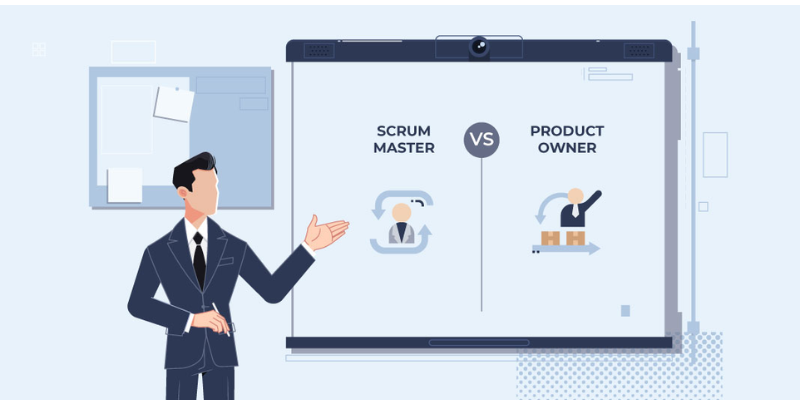
Scrum Masters are essential in helping teams connect with corporate objectives. To manage an organized and well-maintained product backlog, they collaborate closely with Product Owners. Scrum Masters assist in controlling expectations and minimizing misconceptions by promoting communication between the development team and stakeholders. Additionally, they ensure realistic schedules and insightful feedback by educating stakeholders about Agile principles. Teams are able to concentrate on providing value rather than merely finishing tasks because to this teamwork. For Agile deployments to be effective, Scrum Masters, Product Owners, and stakeholders must have strong connections.
A Successful Scrum Master
Effective Scrum Masters possess a blend of Agile knowledge, soft skills, and technical proficiency. They can resolve conflicts and foster cooperation because they have excellent communication and listening skills. They can successfully conquer challenges because of their problem-solving skills. Emotional intelligence enables Scrum Masters to understand team dynamics and inspire others.
A thorough comprehension of Agile concepts guarantees that they efficiently lead teams. Since Agile transformation takes time, flexibility and patience are also essential. In Agile organizations, these abilities make the Scrum Master position vibrant, influential, and well-respected.
Common Challenges Faced by Scrum Masters
Scrum masters frequently deal with issues including organizational support, ambiguous roles, and opposition to change. Self-organization may be a challenge for teams moving away from traditional project management. Scrum Masters need to help teams through this transition with patience and trust. It might be difficult to strike a balance between several parties with different priorities. Nevertheless, these challenges offer chances for development and learning. Effective Scrum Masters see obstacles as opportunities to enhance procedures and build connections. Overcoming these obstacles improves team performance and professional growth.
Career Growth and Opportunities for Scrum Masters
As more sectors adopt Agile, there is an increasing need for Scrum Masters. Jobs like Agile Coach, Product Owner, or Transformation Consultant are examples of career trajectories. Credibility and job prospects are improved by professional certifications such as Professional Scrum Master (PSM) or Certified ScrumMaster (CSM). Scrum Masters with experience may spearhead extensive Agile changes and have an impact on company strategy. Because of this, the position is not only thrilling but also very fulfilling in terms of development and influence.
Why the Scrum Master Role Is Truly Exciting
The Scrum Master is essential to Agile success through team empowerment, cooperation, and continuous improvement. Rather of being a traditional boss, the Scrum Master is a servant leader who supports the success of others.
This position is demanding and rewarding since it blends problem-solving, coaching, and leadership. The Scrum Master’s influence keeps growing as more businesses adopt Agile. Becoming a Scrum Master is an exciting and future-ready career choice for professionals looking for a meaningful work that combines people skills with Agile experience.